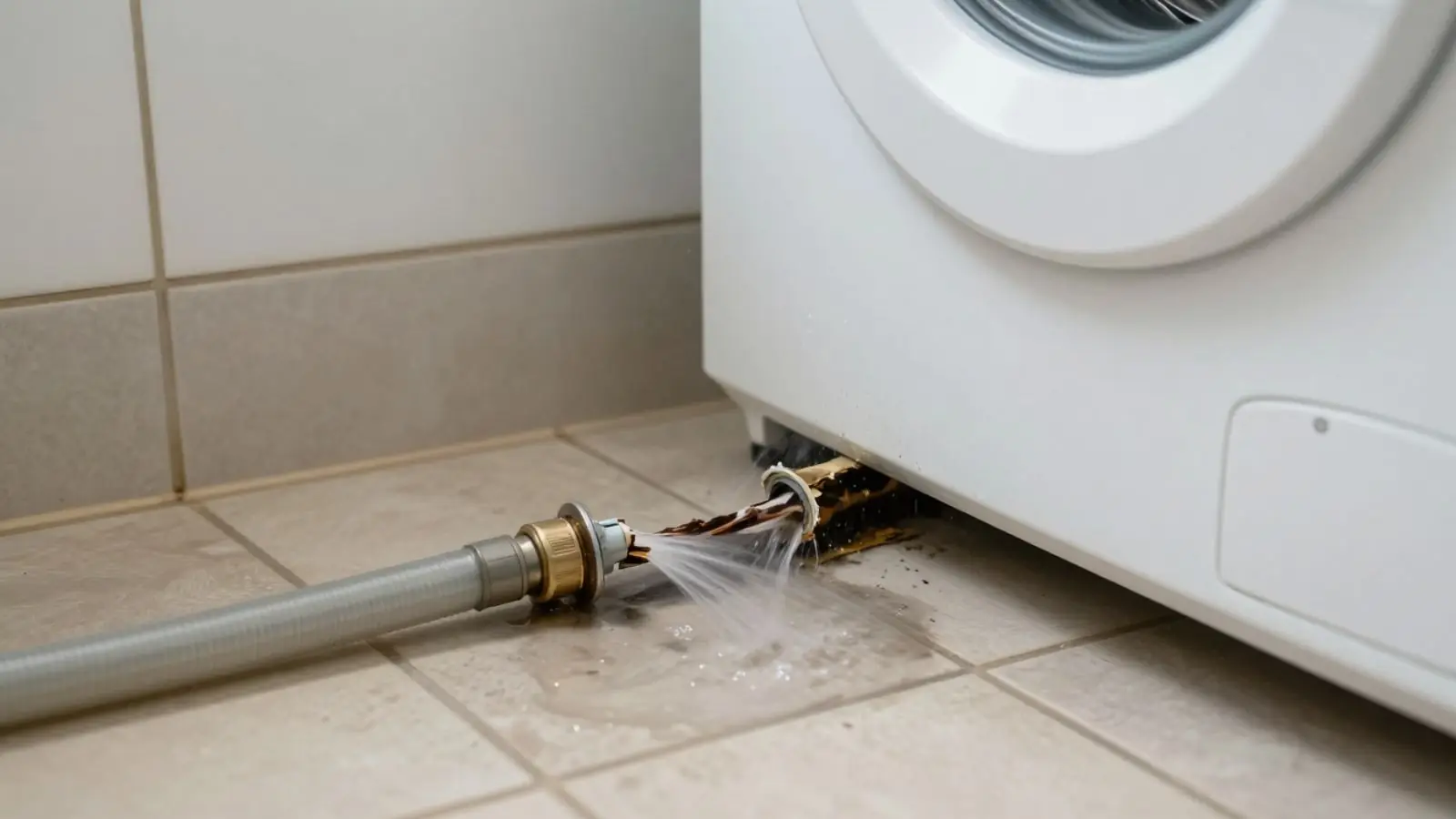
The usual suspects behind a leaking appliance
Washing machine fill hoses fail at the crimp or burst under pressure. Dishwasher supply lines and door gaskets leak into the cabinet below. A refrigerator ice-maker line, a thin tube behind the unit, can drip for weeks before the floor shows it. A drain hose that slips off the standpipe causes overflow in the middle of a cycle.
Supply hoses and drain connections are the usual drip points, and a slow one can run for weeks behind a machine before anyone sees it. Rubber hoses harden with age, so check the hoses and valves behind the washer, dishwasher and refrigerator. Ask a plumber to replace any that are bulging, cracked or stiff. A pipe that splits inside a wall is a different problem, covered on the burst pipe page.
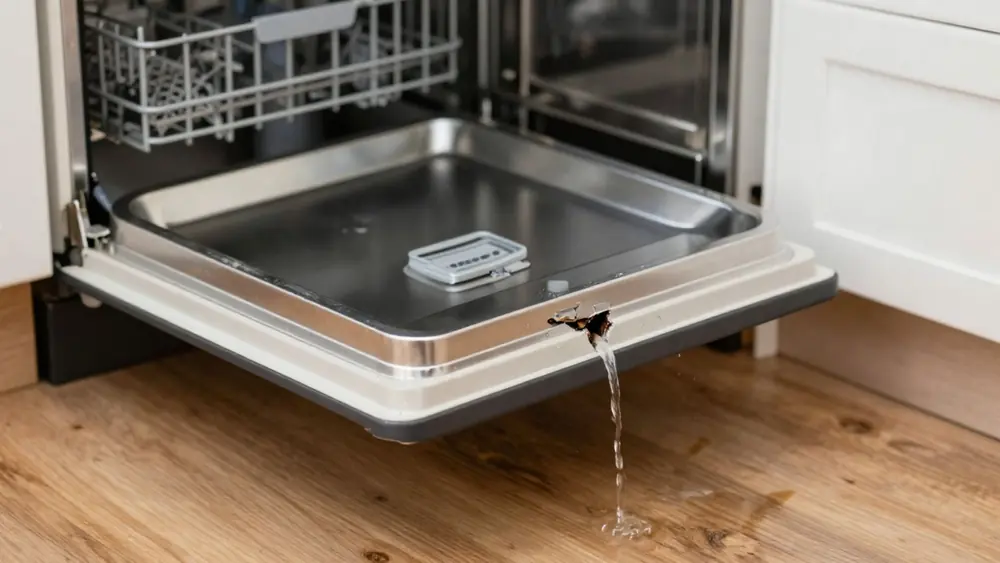
Drying a floor that was soaked from above
Appliance water seeps under flooring, behind toe kicks and into the wall behind the machine. The crew starts by scanning the floor and wall base with moisture meters and an infrared camera to find where it went. That includes the room below, or the unit next door, when the leak is upstairs.
Weighted extractors take water out of carpet. Toe kicks and baseboards come off so air can reach the cavity. Vinyl and laminate planks are often lifted because water gets under them, and hardwood may be dried with mats. Air movers and dehumidifiers follow, with readings logged until the materials are dry. The crew works to ANSI/IICRC S500 practice.
Washing machine discharge is usually category 2 rather than clean water, which changes how carpet and pad are handled. Cabinets that act as water traps are covered on the kitchen water damage page.
Signs of a slow appliance leak
Slow leaks announce themselves by small changes. Look at the floor around the machine and inside the cabinet next to it.
Census Bureau data from the 2023 American Community Survey show 41.8 percent of Montebello housing units are in multi-family buildings. In an apartment or condo, a hose that fails in one unit can show up as a stain in the unit below.
| Sign | What it can mean | What to do |
|---|---|---|
| Cupped or lifting planks near the dishwasher | A slow leak under the flooring | Shut the supply valve and call |
| Musty smell behind the refrigerator or washer | Water sitting in a hidden space | Look behind the unit once the power is off, then call |
| Ceiling stain below an upstairs laundry or bathroom | Overflow or a hose leak traveling down | Tell the upstairs occupant and the landlord, then photograph it |
| Wet floor of the cabinet under the sink | A dishwasher or supply connector leak | Empty the cabinet and shut the valve |
Safety steps while an appliance is leaking
Shut the supply valve to the appliance. Washers usually have two, hot and cold, on the wall behind them. If you cannot find them, close the main water valve. Do not reach behind a machine that is standing in water to unplug it. Turn off the appliance's own breaker only when the panel is in a dry spot you can reach on dry footing.
Dryers and ranges can have gas connections, and many appliances run on 240 volts. If you smell gas, leave and call the gas utility or 911. For sparking, buzzing or any shock risk, stay clear and call the utility or 911.
- Close the supply valves behind the appliance, or the main valve
- Unplug only if the outlet and floor are dry
- Do not drag a heavy machine across a slick floor
- Photograph the hose, the valve and the wet floor
- Tell your landlord or property manager in writing
- Call an appliance technician or plumber to fix the machine
What decides how big the drying job gets
Duration matters more than the appliance. A hose that burst for ten minutes is a different job from a drip that ran for months behind a refrigerator. Flooring type, cabinets, how many rooms or units were reached and the water category all shape the work. Readings set the drying days, so a written scope after the first visit is the fair way to compare.
Machine still leaking?
Shut its supply valve, then call the 24/7 line.
Habits that let a small leak become a floor replacement
Sliding a washer back into place over a wet floor traps water under it. Laying down a towel and calling it done leaves the subfloor wet. Ignoring a drip under the sink because the cabinet floor dries on top is the same mistake in a smaller space.
Drying inside the first two days is what keeps mold from taking hold under flooring. Prevention is simple. Replace aging hoses, leave room behind the machine so you can see the valves, and pull the washer out once a year to look at the floor.
Appliance leaks, renters and who reports what
Sudden and accidental water damage, such as a hose that burst during a cycle, is often covered. Long-running seepage and neglect are often excluded, and flood damage usually needs its own policy. In a multi-unit building, the owner's policy and each tenant's renter policy may both be involved. Check your policy and ask your insurer, and report to your landlord in writing so there is a dated record.
Appliance leaks in Montebello apartments and homes
Renters hold 55.6 percent of Montebello's 20,308 housing units, according to the 2020 Census, so many appliance leaks start in a unit someone does not own. For renters, an appliance leak means two reports, one to the landlord in writing and one to the insurer if you carry renter's coverage. Photograph the damage before the crew starts so the record is dated.
The Census Bureau's QuickFacts, drawing on the American Community Survey for 2020 to 2024, list 3.07 people per household. Busy households run many cycles of laundry and dishes, so check connectors on a schedule. The same approach works in Rosemead and Pico Rivera.
Appliance leak questions
Is emergency appliance leak water damage cleanup available in Montebello?
Yes. The line is answered 24/7, nights, weekends and holidays included. Same-day response is offered when a crew is available, with no arrival time promised. Shut the appliance supply valve first and tell the dispatcher which rooms are wet.
Who fixes the washing machine or dishwasher itself?
An appliance technician or plumber fixes the machine, hose or valve. The crew handles the water, drying, cleanup and removal of wet materials.
Can a leak upstairs damage the unit below?
Yes. Water follows gaps in the floor and openings around plumbing. Tell the neighbor and the property manager early, and photograph both sides if you can.
How do I tell if a leak behind the refrigerator is still going?
Wipe the floor dry, put a dry towel under the line and look again later in the day. A damp towel means the line is still leaking. A crew's moisture meter readings can confirm what is behind the wall.
Do I need to move the appliance before the crew comes?
Only if it is safe. Power must be off and the floor must not be slick. If the machine is heavy or connected to gas, wait for the technician instead of dragging it.
Will my landlord handle appliance water damage in my Montebello rental?
That depends on your lease and the building's insurance, so there is no single answer. Report the leak in writing, keep your photos and ask your insurer what applies to your belongings.