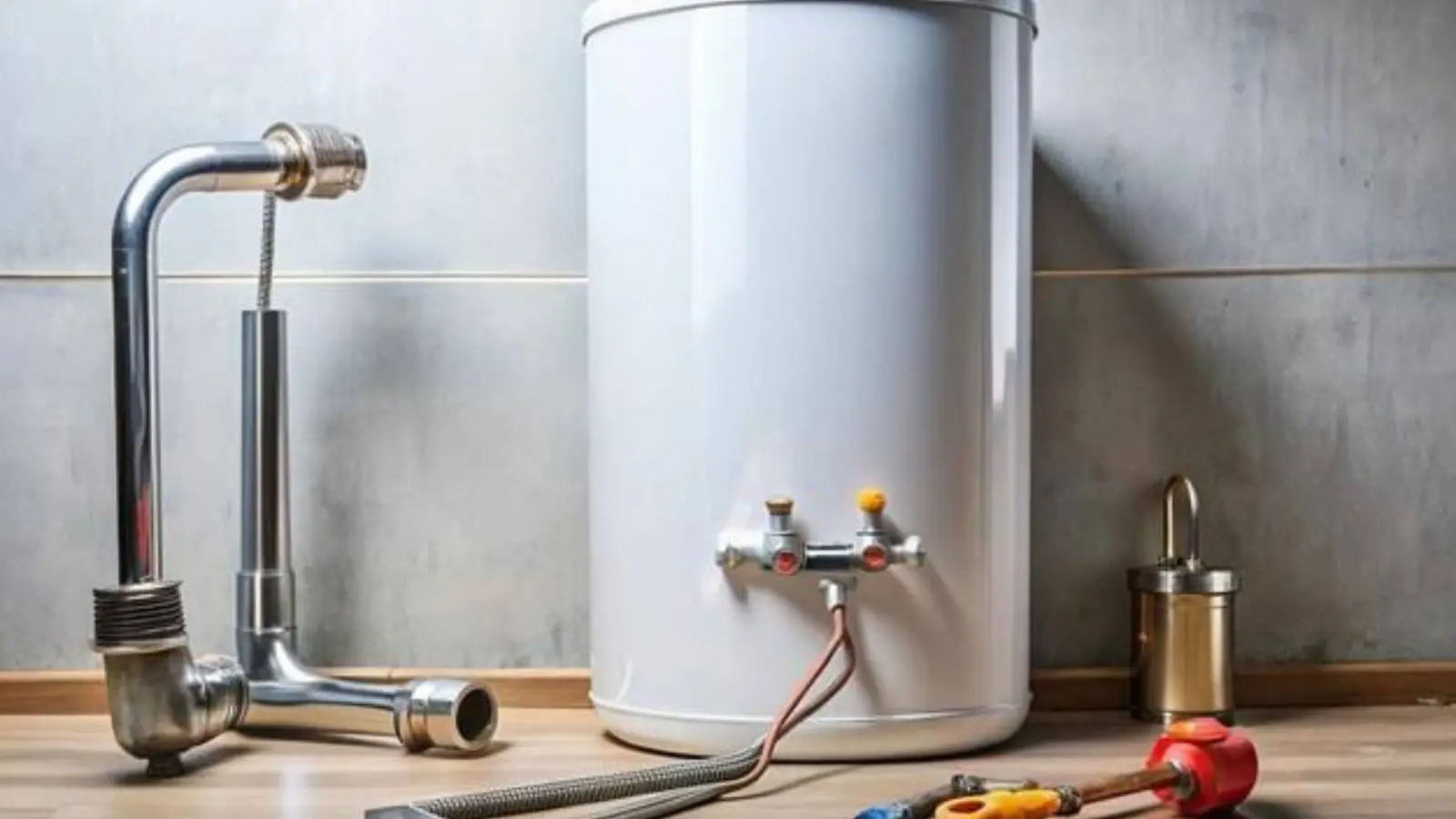
Is it the tank, a fitting or the relief valve?
Where the water comes from decides who fixes it. A pool under the tank with rust at the base usually means the tank itself has failed. Drips at the pipe connections on top are often fittings. Water running from the relief valve discharge pipe means the valve is reacting to heat or pressure, or it is worn.
EPA WaterSense puts the average household loss from leaks at more than 9,300 gallons a year. A relief valve that weeps for months wastes water and soaks the same patch of floor, so a small drip deserves a plumber's visit before it becomes a wet closet. A split pipe inside a wall is a different job, covered under burst pipe damage.
| Where the water shows | What it suggests | Next move |
|---|---|---|
| Puddle under the tank, wet insulation or rust at the base | The tank body is leaking | Shut the cold supply and call a plumber about replacement |
| Drips at the pipes on top | A loose or worn fitting or connector | Shut the cold supply and call a plumber |
| Water at the end of the relief valve pipe | Valve discharge from heat or pressure, or a worn valve | Do not cap the pipe and call a plumber |
| Wet ceiling or wall near an attic or closet unit | Water has traveled from the heater into the structure | Photograph it and call the water damage line |
Gas, power and hot water: safety before cleanup
If you smell gas, do not flip switches or light anything. Leave the building and call the gas utility or 911 from outside. The water damage crew does not handle gas, and the utility should clear the area before anyone goes back in.
With no gas smell, close the cold water valve on the pipe feeding the tank. For an electric heater, turn off its breaker only if the panel is dry and you can reach it without stepping in water. Water from a tank can be hot enough to scald, so wait before wading in or touching the tank.
- Gas smell: leave and call the gas utility or 911
- No gas smell: close the cold water valve above the tank
- Electric heater: breaker off only if the panel is dry and reachable
- Keep children and pets out of the room
- Photograph the tank, its label and the wet floor before moving anything
Where the tank sits changes what gets wet
A heater in a garage mostly wets a concrete slab, boxes and the bottom of a wall. A closet unit soaks carpet, baseboards and the wall behind it. A tank in an attic is the hardest case, because water runs through insulation and drywall to the ceiling of the room below. A washer or dishwasher leak is covered on the appliance leak page.
Census Bureau data from the 2023 American Community Survey put the median build year of Montebello homes at 1963. Houses of that age can have heaters in tight closets or garage corners, so look at what is stored under and beside yours and move it to dry ground.
California Health and Safety Code section 19211 requires existing residential water heaters to be braced, anchored or strapped against earthquake movement. Check the straps. A tank that shifts can strain its supply lines, and tightening a loose strap is an easy job for a plumber.
Mistakes that turn a leaking heater into a bigger loss
Capping the relief valve pipe is the most dangerous mistake, because that pipe is a safety outlet. Mopping the surface and leaving wet baseboards, carpet pad and insulation in place is the most common one.
Do not switch an electric heater back on until the plumber has refilled the tank, because heating elements can burn out when they run dry. Drying only the visible puddle also ignores water that has already moved into the wall.
How the crew dries the closet, garage or ceiling
After the plumber has made the heater safe, the crew finds the edges of the wet area with a thermal imaging camera and moisture meters. Water often hides in the bottom plate of a wall or under a closet floor, so readings come before any equipment is placed.
Weighted extractors lift water from carpet and pad. On a garage slab, air movers and dehumidifiers pull moisture from the concrete. If water reached an attic ceiling below, wet insulation and drywall are cut out and bagged, and the cavity is dried through openings. The crew works to ANSI/IICRC S500 practice and logs readings until the materials meet a dry goal.
Tank water is clean at the start, but it can slide into a worse category if it sits in carpet. After drying, cleanup and sanitizing follow, as described on the water damage cleanup page.
Heater leaks, wear and what a policy may cover
Insurers often treat a sudden tank failure differently from a slow drip that went unaddressed. Sudden and accidental damage is often covered, and gradual leaks and neglect often are not. The heater itself is often treated as a maintenance item, so ask how your policy handles the unit and the water damage separately. Policies differ on tank failures, so ask your insurer which wording applies to yours.
What changes the size of the drying job
The footprint of the wet area matters most. After that come the floor and wall materials, whether water reached an attic ceiling or a room below, and how long it ran before anyone noticed. Access to the heater area also affects the work, since equipment has to reach the wet materials. Drying days are set by readings, not by a calendar.
Heater leaking now?
Close the cold supply and call the 24/7 line.
Water heater leaks and renters in Montebello
Of the 20,308 housing units counted in 2020, 55.6 percent were renter-occupied, so tenants often have to report a failed tank rather than replace it. If you rent, report a leaking heater to your landlord in writing and keep a copy. Photograph the damage so the record shows what was wet and when.
The same steps apply across the city line in Pico Rivera and Monterey Park. When a heater fails, the plumber replaces the unit and the crew handles the water, so it helps to line up both calls early.
Water heater leak questions
Is emergency water heater leak cleanup available in Montebello?
Yes. Calls are answered 24/7, including nights, weekends and holidays. A crew goes out on the same day whenever one is available, with no arrival time promised. Shut the cold water valve to the tank and tell the dispatcher what is wet.
Can your crew repair or replace my water heater?
No. A plumber repairs or replaces the heater. The crew removes water, dries the area, cleans up, removes wet materials and coordinates rebuild work afterward.
What should I do if I smell gas near the heater?
Do not touch switches or try to find the leak. Leave the building, then call the gas utility or 911 from outside. Water cleanup waits until the utility says the area is clear.
Is the water from a leaking tank hot?
It can be. Tank water can scald, so wait before touching the tank or wading through the puddle. A plumber can make the heater safe, and the crew starts extraction after that.
Does drying start before the plumber finishes?
Usually the plumber comes first, because drying is pointless while water is still coming out. If the leak is stopped at the supply valve, extraction can often begin while the plumber is arranged.
Who handles heater water damage in a rented home in Montebello?
That depends on the lease and on the landlord's and tenant's insurance, so there is no single answer. Report the leak in writing, keep your photos and ask your insurer what applies.